
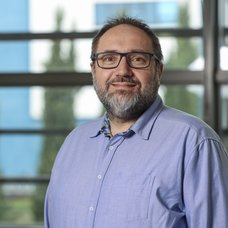
Dr. Tomas Zurawski
Dr Tomas Zurawski is an Assistant Professor in the School of Biotechnology at Dublin City University. His research focuses on the functional neuropharmacology of the peripheral nervous system, particularly the mechanisms and modulation of motor and autonomic neurotransmission. A central theme of his work is the development and application of biologically relevant experimental models and functional bioassays to investigate neuronal activity and evaluate neuroactive compounds and biotherapeutics.
He received a BSc in Systematic Biology & Ecology and an MSc in Systematic Zoology & Ecology from Masaryk University, Czech Republic, before undertaking doctoral research at Queen’s University Belfast, where he was awarded a PhD in Parasitology in 2002. A Marie Skłodowska-Curie Postdoctoral Research Fellowship subsequently supported his move to University College Cork to investigate the role of Rab GTPases in intracellular membrane trafficking.
In 2004, he joined Prof J. Oliver Dolly’s newly established International Centre for Neurotherapeutics at Dublin City University, contributing to multidisciplinary research on neurotransmission and the development of neuroactive biotherapeutics. His work has particularly involved the development and application of cellular, ex vivo and in vivo functional assays to determine the biological activity, potency, selectivity and duration of action of novel therapeutic candidates.
He has particular expertise in the pharmacology of clostridial neurotoxins, including botulinum neurotoxins, and their use both as experimental tools for investigating neurotransmission and as highly selective biotherapeutics for modulating neuronal activity.
Research Interests
My research focuses on understanding how peripheral nerves communicate, how their activity can be measured in physiologically relevant experimental systems, and how neuronal signalling can be selectively modulated.
I am particularly interested in the functional neuropharmacology of motor and autonomic neurotransmission and in developing cellular and ex vivo approaches for evaluating neuroactive compounds and biotherapeutics. These models are used to investigate biological potency, neuronal selectivity, duration of action and functional effects on neuronal communication.
I have particular expertise in clostridial neurotoxins, including botulinum neurotoxins, which are used both as tools for investigating mechanisms of neurotransmitter release and as long-acting biotherapeutics. Current experimental interests include ex vivo models of peripheral neurotransmission, autonomic neuronal signalling, calcium imaging and functional cellular bioassays.