
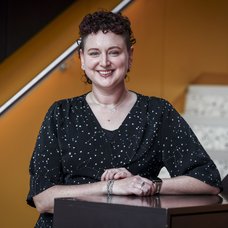
Dr. Leah Ridgway
Leah holds an MEng degree and a PhD in Electronic Engineering from the University of Nottingham, UK.
Joining DCU in 2022, Leah was a part of the core curriculum design team for the BSc Global Challenges programme; an interdisciplinary programme aiming to produce the next generation of adaptive problem solvers our world needs. Leah designed the technical electronics part of the degree; leaning into their research interests in providing high quality engineering learning experiences to non-specialists.
Within the School of Electronic Engineering at DCU Leah excels in design, delivery and assessment of large classes including both lectures and laboratories, drawing on their professional experience and research interests. Introduction to Electronics is taken by all (around 250) first year students studying engineering at DCU. Whereas their second year Circuit Analysis Techniques module is taken by a much smaller class of around 170 students. Even with large classes, Leah is passionate about the importance of providing physical laboratories in engineering and argues these can be designed and delivered well, and are vital to student development.
Previously, Leah has been an academic within electrical and electronic engineering at the University of Nottingham, Ningbo China (UNNC); the University of Liverpool; and the University of Nottingham UK.
At the University of Nottingham Leah joined the Department of Foundation Engineering and Physical Sciences (common entry year 0 for engineering, physics and computer science) - responsible for teaching electrical and electronic engineering curriculum areas. Working as part of a small interdisciplinary team, Leah learnt a lot about how to engage students with a subject that is not their main area of interest. Highlighting the interdisciplinary nature of modern engineering is a key theme in their teaching.
In 2017 Leah returned to the Department of Electrical and Electronic Engineering at the University of Nottingham where they graduated from and remained there until 2022. They worked with students from all year groups and ran final year projects in intuitive control of electronic devices - the glove controlled 3D printed hand being one of the most popular and visible around the Department at the time.
Leah's teaching interests include circuit fundamentals, ethics, sustainability and business planning for engineers.
Current teaching specialisms
Large class teaching in electronic engineering
Leah has redesigned and delivers large class modules in electronic engineering fundamentals, incorporating lectures and laboratory teaching. This includes the first year module, Introduction to Electronics (250 students from all engineering disciplines), and the second year Circuit Analysis Techniques (170 students from electronics, mechatronics and biomedical programmes).
Final year projects in mechatronics and electronics
Leah supervises a range of industrially orientated final year projects in both mechatronic engineering and electronic and computer engineering. These span a range of topics incorporating sensors and how people interact with electronic systems, and are often "solution agnostic" where a problem is presented and they work in partnership with students to develop a project that can be built to solve the problem based on the interests of the project student. Sample past project titles include:
- Find My Item: A Cold Chain Logistics Solution to Last-Mile Delivery using IoT Technology
- Human-Machine Interaction: Gesture Controlled Robotic Arm
- Implementation of Electronic & Mechanical Components in an Exergame to Aid the Rehabilitation of Stroke Victims
- Sensor System Design for Head Motion Analysis During a Rally
- Mechatronic System for Medication Management in an Independent Living Environment
- Engineering the Escape: User-centred Mechatronics Design for Escape Rooms
They are a Programme Chair for DCU's Common Entry into Engineering undergraduate course.
Leah is a member of DCU's CASTeL group; Ireland’s largest Research Centre in Science, Technology, Engineering, and Mathematics (STEM) Education and sat on the organising committee for the Centre's SMEC STEM Education Conference in 2026.
Research Interests
Leah is part of the DCU Centre for the Advancement of STEM Teaching & Learning (CASTeL), Ireland's largest STEM education research group which covers education from early years through to adult education across all STEM subjects.
Leah is a mixed methods researcher, comfortable working with both quantitative and qualitative data. This approach is important to address research questions about how do students learn in engineering. During their modular teaching, they wanted to understand how students learn from circuit diagrams and how they approach rearranging them, which has lead to collaboration with the School of Psychology at DCU to look in more depth at spatial thinking skills in engineering students. The ultimate goal is that if this is better understood, how can we change our curriculums to support more students to learn more effectively.
Leah has also authored work on practical skills and laboratory learning; the conceptual understanding of students learning electronics; transversal skills; and the importance of the human element in engineering design at undergraduate level.
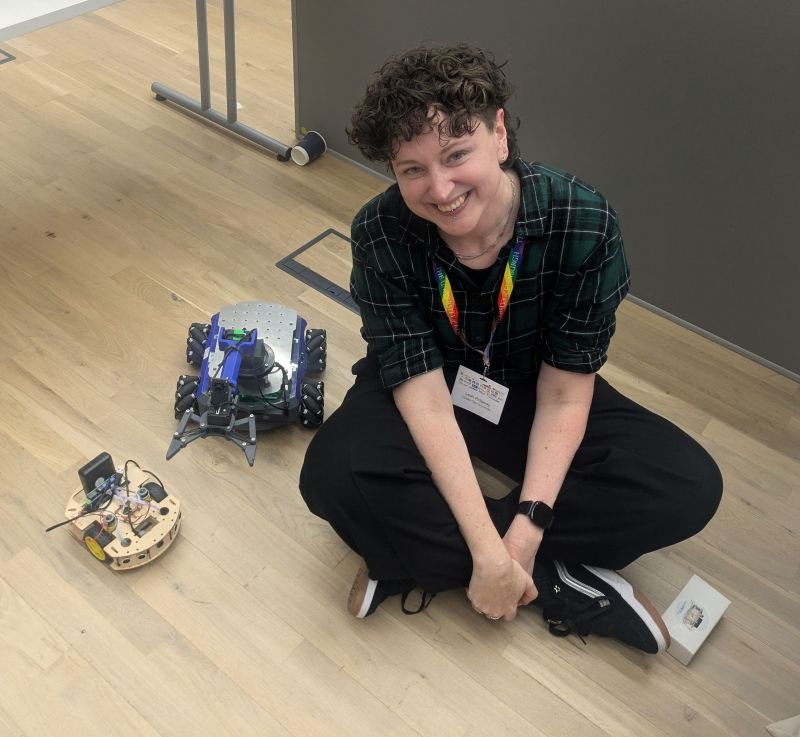
Teaching Interests
Throughout their career, Leah has designed, delivered and assessed modules across all year groups for electronic engineering programmes.
Because of their belief that engineers have the power to make the world better, in addition to teaching technical modules, they have designed and delivered content and modules on ethics, sustainability and business planning. Leah is an advocate of developing transversal (or transferrable) skills in engineering (technical brilliance alone is not enough) and has authored a chapter with the SEFI (European Society for Engineering Education) Handbook on Teaching Transferable Competencies and Skills.
Leah's research and teaching are interlinked; by better understanding how students learn, we can improve the education we offer and graduate more able engineers. Leah specialises in teaching large classes in the early stages of degree programmes; if students understand the fundamentals they will go on to succeed in their later modules and can apply their understanding in a flexible way (rather than relying on rote learning to pass exams).
Leah offers individual projects are in the area of human-machine interaction, working to make the way people utilize computer interfaces more intuitive, or to innovate in how we interact with technology (for example in social robotics).
Leah was awarded the DCU President's Award for Teaching Excellence in 2024 as part of the Global Challenges Team. They have also received Teaching Excellence Awards from the University of Nottingham (2015, 2018) and the University of Liverpool (2014).
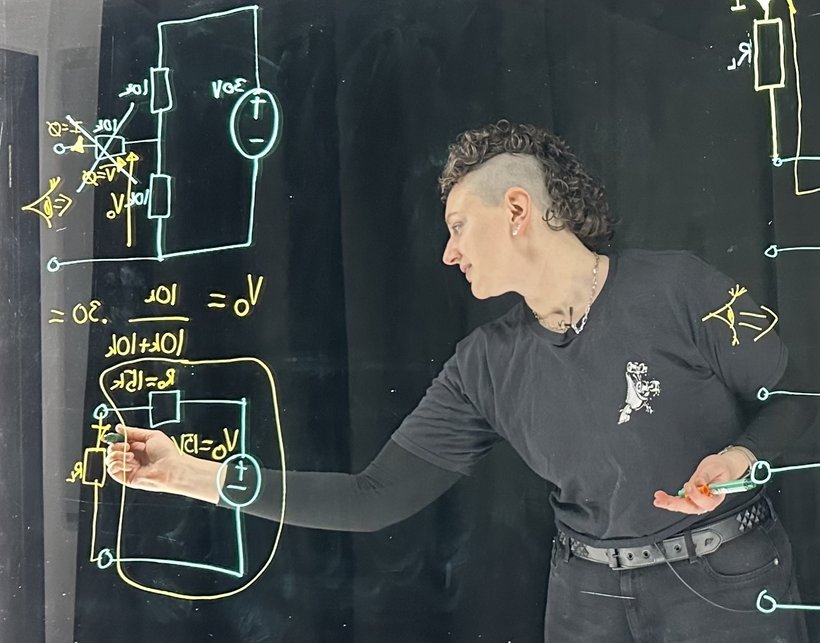
CV
Academic Qualifications
- PhDField of study: Engineering and technologyProject: Electronic Engineering
Professional Qualifications
- Senior Fellow - Advance HE(SFHEA)2022 – Ongoing