
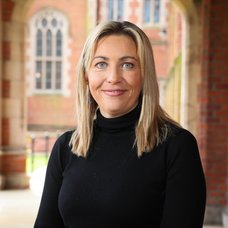
Dr. Fiona Murphy
Fiona Murphy is a social and cultural anthropologist, writer and filmmaker whose work examines how people make lives, sustain relationships and imagine futures amid displacement, inequality and political violence. She is Assistant Professor in Refugee and Intercultural Studies in the School of Applied Language and Intercultural Studies at Dublin City University and a volunteer IELTS teacher with the Irish Refugee Integration Network (IRIN). She served as Programme Chair of the MA in Refugee Integration from 2023 to 2026.
Across long-term ethnographic work with members of Australia’s Stolen Generations and with people seeking asylum and refuge in Ireland, Northern Ireland and Turkey, her research follows the intimate and institutional workings of dispossession: the archives through which families search for one another, the labour through which displaced people sustain households, and the everyday practices of care and solidarity through which belonging is negotiated. Questions of memory, reparation and the unfinished life of colonial violence run through this work, alongside a sustained interest in the possibilities and limits of refugee integration.
Her books include Integration in Ireland, co-authored with Mark Maguire, and the co-edited collections Memory and Recovery in Times of Crisis, Envisioning Sustainabilities: Towards an Anthropology of Sustainability, Collaborations: Anthropology in a Neoliberal Age, and A Collection of Creative Anthropologies: Drowning in Blue Light and Other Stories. She is Co-Editor-in-Chief of Anthropology and Humanism and co-founder and co-convenor of the European Association of Social Anthropologists’ Creative Anthropologies Network. Her scholarship also extends to sustainable consumption, design justice, climate displacement and the relationships between communities and their environments.
Creative and public anthropology are central to her practice. Working across ethnographic writing, poetry, letters, film and collaborative arts, she explores how different forms of expression can carry knowledge into public life and open encounters across social and political difference. With Maria Loftus and collaborators, her films include Ordinary Treasures: Objects from Home and Why Wouldn’t You?, which attend to forced displacement, material memory and community solidarity. Her poetry and creative writing have appeared in Public Anthropologist, Commoning Ethnography, Otherwise Magazine, The Belfast Review and Apricot Press, among other publications. She also writes for TheJournal.ie, The Conversation, SAPIENS, Allegra Lab and other public outlets.
Her engaged research with Evropi Chatzipanagiotidou and Syrian women in Istanbul received Queen’s University Belfast’s Vice-Chancellor’s Research Engagement Prize in 2019. She has contributed research to policy and practitioner discussions on asylum and refugee inclusion, including evidence to the House of Commons Northern Ireland Affairs Committee. Through her teaching, editorial work and community collaborations, she is committed to an anthropology attentive to the people with whom knowledge is made and to the wider publics among whom it circulates.
Research Interests
My research asks how people live with the consequences of displacement, colonial violence and unequal access to resources, and how practices of care, creativity and collective action make other futures possible. Bringing social and cultural anthropology into conversation with forced migration studies, memory studies and critical approaches to sustainability, I work ethnographically across institutions, households and community initiatives, following the relationships through which exclusion is reproduced and belonging takes shape. Collaboration, reciprocity and the responsibilities of representation are methodological questions running through this work.
My long-term research with Australia’s Stolen Generations examines the removal and institutionalisation of Aboriginal children and the continuing presence of these histories in family relationships, archives and public life. Through attention to testimony, letters, kinship and the everyday work of remembrance, I consider how the temporalities of trauma and reparation enter lives that also exceed the categories through which suffering is officially recognised. This research informs my continuing writing on memory, reconciliation and the ethical demands of ethnographic accompaniment, including the book project Fixing the Shadows.
In Ireland, Northern Ireland and Turkey, my work follows asylum and refugee experiences through the institutions and encounters that organise everyday life. With Ulrike M. Vieten, I have examined post-migration stressors, mental health and the racialised and sectarian boundaries of inclusion, contributing to debates on refugee integration policy in Northern Ireland. With Evropi Chatzipanagiotidou, my research with Syrian artists and women-led social enterprise in Istanbul explores labour, waiting and the entrepreneurial demands placed on displaced people. Our writing considers how artistic and material practices express loss, sustain livelihoods and unsettle conventional understandings of agency and voice. Listening, silence and sonic citizenship have become important ways of approaching these questions.
A connected strand of my work examines sustainability through everyday economic life and the unequal possibilities of environmental participation. Research on thrift, second-hand consumption and parenting during Ireland’s austerity years led to wider collaborations in business and design anthropology. My current interests bring design justice, community knowledge and creative methods into discussions of climate displacement and environmental change, including collaborative work in Dingle and Balbriggan. I am concerned with whose expertise counts in imagining and planning sustainable futures, and with the social relationships through which knowledge can travel between communities.
Public and creative anthropology are integral to how this research is undertaken and shared. Through poetry, fiction, letters, film, podcasts and collaborative arts, I explore what different forms allow us to notice and communicate, and the ethical questions they raise about authorship, visibility and voice. Work with IRIN and Maria Loftus has developed this commitment through co-created films and participatory storytelling, while my editorial work with Anthropology and Humanism and the Creative Anthropologies Network supports experimentation across the discipline.
My research has been supported by the Irish Research Council, the British Academy and other research and engagement schemes. It has also involved consultancy and policy-facing work on intercultural healthcare, Indigenous enterprise and refugee inclusion. Research with Vieten has been presented at Stormont and to the House of Commons Northern Ireland Affairs Committee, alongside contributions to asylum and direct provision consultations. Our Istanbul collaboration received Queen’s University Belfast’s Vice-Chancellor’s Research Engagement Prize in 2019, recognising work that brought ethnographic research into sustained relationships with Syrian women developing a social enterprise.
Teaching Interests
My teaching brings anthropological inquiry into close conversation with the ethical and practical questions raised by forced displacement, inequality and social change. Having served as Programme Chair of the MA in Refugee Integration at DCU from 2023 to 2026, I work across research, pedagogy and public engagement, supporting students to examine how policy categories and institutional practices enter the lives of people seeking asylum and refuge, and how these accounts might inform more just approaches to inclusion.
I teach across forced migration and refugee studies, social and cultural anthropology, research methods and creative practice. My wider teaching experience includes business and design anthropology, conflict studies and sustainability, developed through appointments and collaborations in Ireland, the United Kingdom, France and Australia. Within DCU, my teaching has also included On Being Human in Times of Crisis, bringing anthropological perspectives to questions facing students of social science and cultural innovation.
Collaboration and solidarity shape my approach to learning. I draw on creative and multimodal methods, community engagement and interdisciplinary exchange to help students connect conceptual argument with the detail and complexity of lived experience. Decolonial and feminist perspectives inform the selection of readings, the organisation of discussion and the consideration of whose knowledge becomes authoritative. I am particularly interested in teaching practices that make room for uncertainty, experimentation and the patient development of an independent scholarly voice.
I supervise postgraduate research across displacement, memory, belonging and creative anthropology, and have experience supporting interdisciplinary doctoral communities. I was awarded Senior Fellowship of Advance HE in July 2026. My professional development includes the Postgraduate Certificate in Higher Education Teaching at Queen’s University Belfast (2019), doctoral supervision training (2019) and the Universal Design for Learning Digital Badge (2022). Across classroom and online settings, I seek to build an accessible, intellectually generous environment in which students can undertake rigorous work and recognise its responsibilities beyond the university.
CV
Professional Qualifications
- Senior Fellow of Advance HE(SFHEA)07/2026 – Ongoing