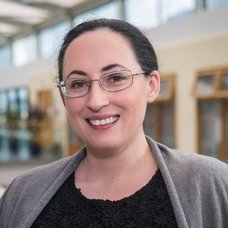
Dr. Emma Coyle
Dr Emma Coyle is a lecturer in organic and medicinal
chemistry in the School of Chemical Sciences, Dublin City University (DCU),
since 2014.
Dr Coyle received her BSc in Chemical and Pharmaceutical
Sciences and PhD in Organic Photochemistry from DCU. She then joined the School
of Chemistry in the University of Nottingham as a research fellow in the groups
of Prof. Rob Stockman and Dr Ross Denton, in collaboration with Prof. Sean
Rigby in the Department of Chemical and Environmental Engineering. In 2011, she
rejoined DCU as a postdoctoral researcher in the group of Dr Chris O’Brien in
the National Centre for Sensor Research (NCSR). Throughout these experiences
she focused on research in organic synthesis, in particular development of novel
methodologies or green routes to high-value molecules.
Research Interests
New methodologies for catalysis
organic chemistry • green chemistry • flow chemistry • photochemistry • organocatalysis • medicinal chemistry
The overarching
theme of my research is catalysis for organic synthesis, including
organocatalysis, bioorganic catalysis and photocatalysis. My group seek to
develop new methods and new molecules, which can be applied in the preparation
of biologically and medicinally interesting compounds. Some areas of my
research include sulfur as an organocatalyst, biocatalysis for synthesis of
pharmaceuticals, and new macrocyclic molecules for water purification.
In this research,
my group endeavour to achieve useful and valuable chemical transformations
through new methodologies, for example through immobilisation of catalysts on
polymeric supports or in microreactor channels. The combination of new
catalysts and new reactor design can lead to enhancement of process efficiency
and sustainability.
Teaching Interests
My teaching and
research are driven by my passion for chemistry, and desire to encourage others
to engage with chemistry. Through my teaching, I try to ensure students come to
enjoy learning about chemistry, both theory and application. I have found that
students can become ‘bogged down’ with the theory, and lose sight of the fact
that chemistry is an everyday subject – we encounter it all the time! I seek to
guide students to see both the specific nuances of how reactions occur and to
appreciate their wider application.